$20bn
Kering Group total revenue last year — across all 13 luxury brands, Gucci to McQueen, Saint Laurent to Balenciaga
Digital fashion · Lecture excerpt
As we build a digital process from concept to consumer, we are archiving fashion at a scale never envisioned before — and turning heritage into contemporary assets.
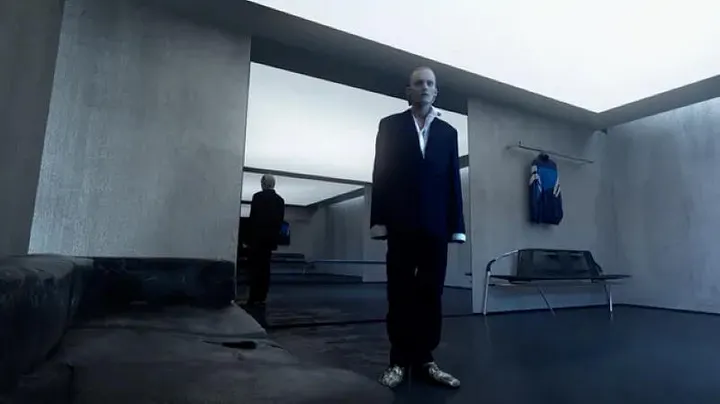
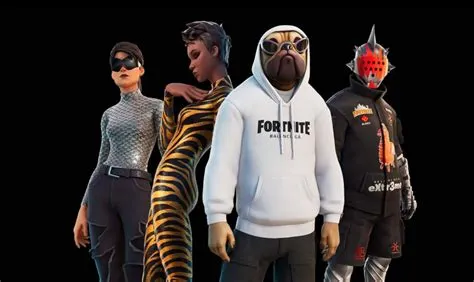
Balenciaga has been puncturing the black mirrored membrane between fashion's physical and digital realms for a while — notably through its video-game-inspired look-book, Afterworld, and its collaboration with Fortnite.
This is not a pandemic-born trend for heavily branded, Gen-Z and Alpha, gamer-focused marketing. Their CEO Cédric Charbit has built a dedicated business unit to explore profitable XR commerce that spawns from the Metaverse, creative AI and digital tools.
It makes perfect sense. Other industries — automotive, architecture, film — have transformed their creative processes, output and profits through digitisation. With the past decade's advances in computing power and real-time simulation of materials, fashion is now following their lead: not only discovering more effective ways to work, but exciting opportunities for collaboration and new modalities in which to present and sell.
In Afterworld we traverse multiple zones. Initially through virtual showrooms, where wholesale buyers and end consumers can browse and shop the latest collection alike. Then into a mix of cut-scenes and game-play that explores immersive seasonal storytelling — set in surreal landscapes, with tertiary characters in place of models, wearing key looks from the collection.
It's an immersive virtual extension of the salon presentation and sell-in that gives us an idea of what web3 promises to be: a portal into other realms in which we can explore, learn, create, shop, work and play.
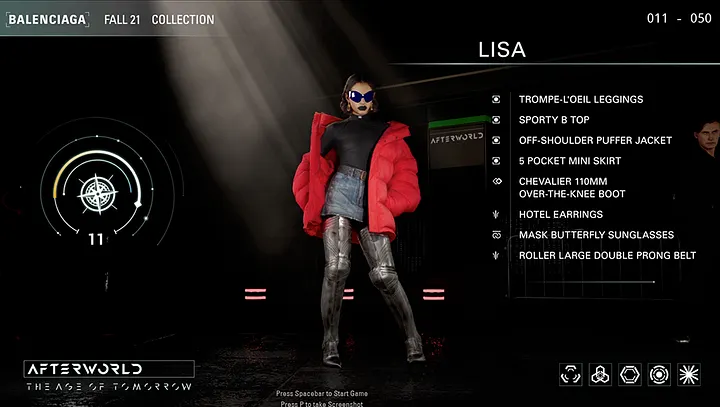
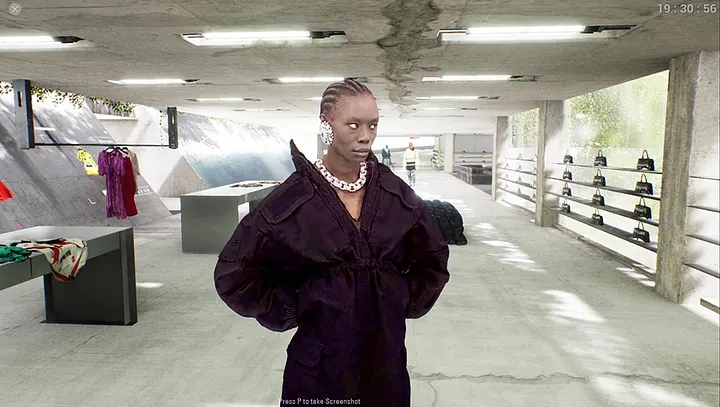
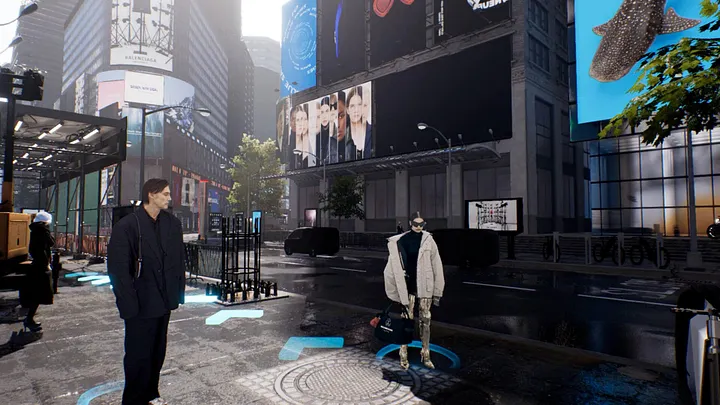
But zoom out — what else are we looking at here? As we create a digital creative process from concept to consumer, we are digitally archiving fashion in a way, and at a scale, never envisioned before.
Fashion businesses are adopting increasingly powerful 3DCG creation and visualisation tools like CLO3D and Browzwear to design and collaboratively develop product. These functional assets can be further developed — with digital tools and capture technology — into high-fidelity digital assets that replace traditional photography and video. Plus 3D models for gaming, augmented reality and virtual reality experiences.
#DigitalFirst archives fashion at a scale never envisioned before.
Luxury fashion and sportswear brands are investing heavily in these technologies, and several have started to use them to digitally archive their heritage — transforming it into high-value, IP-protected, contemporary assets.
At last year's MET gala, Kim Kardashian wore the dress Marilyn Monroe wore when she sang Happy Birthday to President J.F. Kennedy in 1962. The gown's owners, Ripley's Believe It or Not!, received much criticism after images circulated online of the damage the fragile dress had suffered from the publicity stunt.
Ripley's had bought the dress for $4.8 million in 2016 — a world record for the most expensive dress sold at auction. It is thought to be worth more than $10 million today.
"This is a significant piece of American culture, celebrity culture, political culture — probably the most famous gown in the world and definitely the most expensive. When you buy something of such significance, you really need to stick to your word to protect and preserve it… and clearly that didn't happen."
Scott Fortner — Marilyn Monroe archivist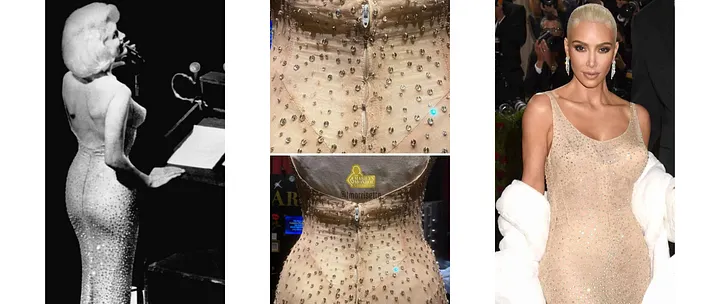
Adorned with more than 6,000 hand-sewn crystals, the gown was designed by French costume designer Jean Louis. It was so tight Monroe reportedly had to be sewn into it. Over the past half-century, archivists have developed specific guidelines for how historic garments should be handled. One of them is that you absolutely cannot wear them.
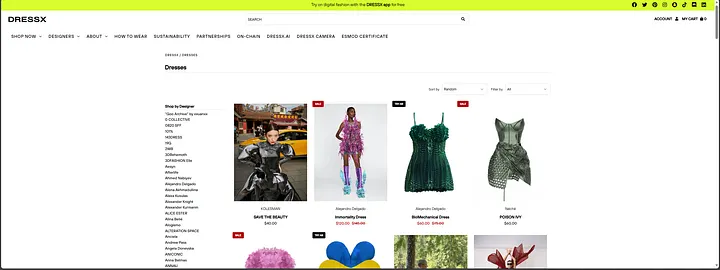
Now imagine Kim Kardashian had worn a digital twin of Monroe's gown to the MET gala. A virtual replica, viewable in real-time with augmented reality on your smartphone, like a Snapchat lens. Kim could have been the first to wear the fashion filter, with global consumers able to purchase their own download on a site like DressX the next day.
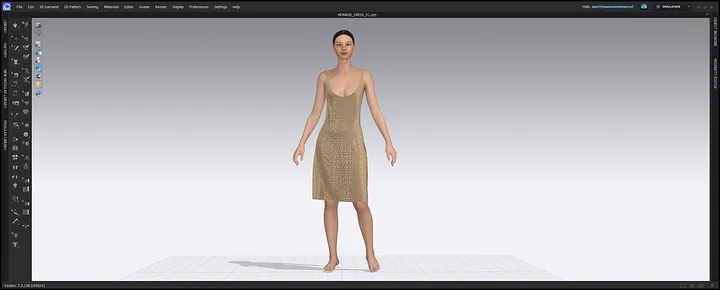
Would this devalue the original? Doubtful — if anything it would increase its value. A parallel: an original Andy Warhol painting doesn't lose value because we can buy postcards and posters of it. It restates the desirability of the piece, and of the artist.
This is brand-building 101 — giving access to brands in inventive ways that creates mind-share and transforms them from being known to being loved. Real-time AR filters don't have the fidelity of real life just yet. But it is possible to experience digitally rendered fashion archives in beautiful quality through web3 and virtual reality.
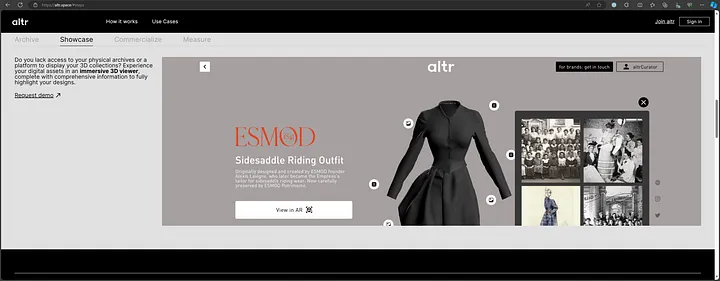
Start-ups like ALTR, backed by FARFETCH, have already begun to provide such services to brands and institutions — digitising, and creating opportunities to commercialise, their fashion archives.
Through their proof-of-concept examples ALTR demonstrate various ways digital twins of archived fashion can augment and elevate our experience. They add an interactive layer of context, opening further repositories of insight to explore. And the experience can be immersive — augmented-reality tools let you see the garment come to life in front of you. Through game-play, and wearing archival pieces as fashion filters, they become contemporary fashion expression.

For those who don't see the potential value of digital fashion just yet, consider this.
$20bn
Kering Group total revenue last year — across all 13 luxury brands, Gucci to McQueen, Saint Laurent to Balenciaga
$6bn
Fortnite revenue last year — selling only game skins and accessories. That's digital fashion, worth a third of Kering's total output.
Those game skins are equally creating emotional responses — signalling status, culture and self-expression through the fashion experience.
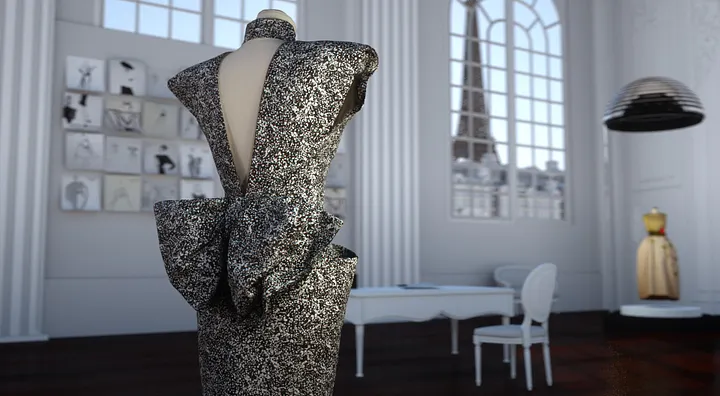
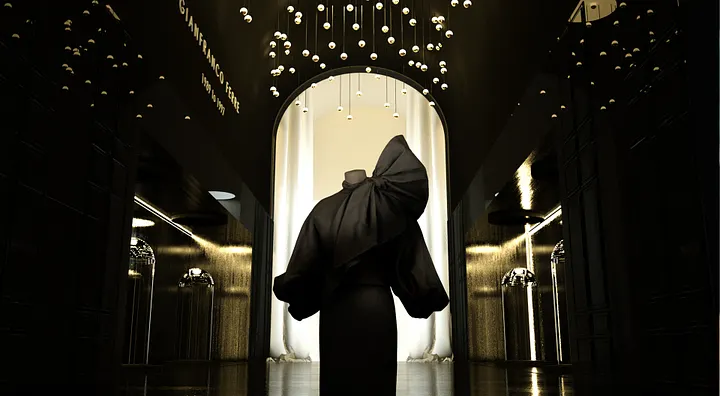
These garments have been beautifully recreated using advanced 3D scanning and photogrammetry by Monochrome in Paris. You can start experimenting with this technology using just your smartphone camera and free apps like Scaniverse or Polycam.
It will be interesting to see how digital archiving develops as tools like CLO3D and Browzwear become more prevalent in the creative process — building the 3D model from the outset, as part of product development and communication.
The Roberts|Woods Magic Pleats dress gives us an idea of what that might look like. It was originally designed and created for the ICA's 2019 Digital Craft exhibition — made using an engineered digital print, pleated and handmade in their UK workshop. A digital twin was created as part of the development process, and that has been transformed into a limited-edition NFT, which sold on The Dematerialized as part of a 'phygital' offering for €5,000.
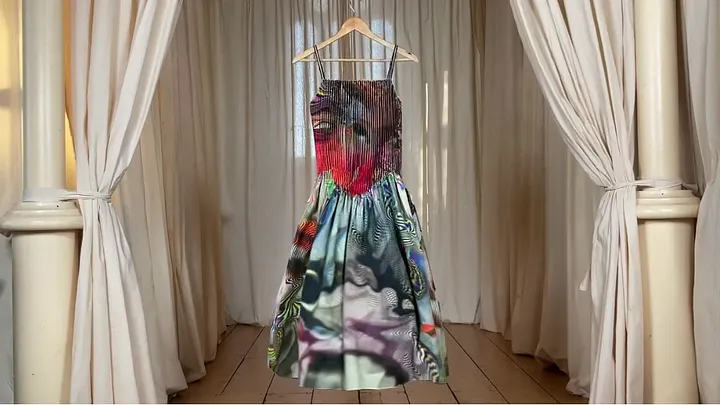
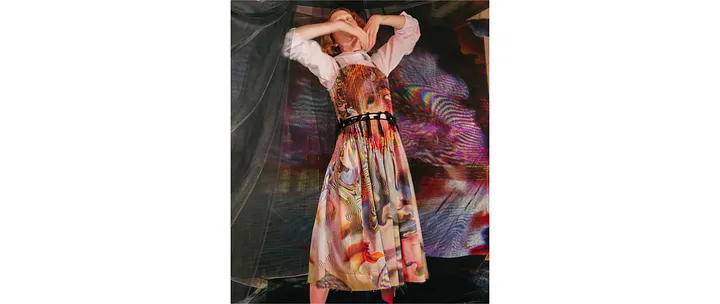
Imagine how a digital workflow could augment your creative process: creating opportunities for sustainable production, gamifying sell-in, communication and promotion, and opening additional revenue streams across digital platforms. This can support growth and awareness for businesses of every size.
Heritage becomes a high-value, #contemporary asset.
Innovation looks for pain-points, and industry turbocharges technology that benefits the bottom line. Much of the visualisation technology fashion uses is driven by the games and film industries. One development pathway is increased real-time realism during game-play and shooting — a desire for greater fidelity in digital twins of actors, costumes, props and locations.
Today, popular actors and musicians are taking control of the creation — and, importantly, the IP rights — of their own avatars and digital likenesses. Deceased stars are being resurrected and their likeness licensed for new content: James Dean will soon co-star in Finding Jack, a Vietnam-era film in production. Nostalgia sells — so why not iconic fashion pieces?
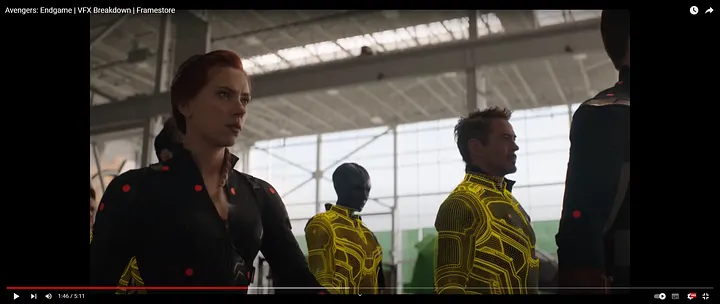
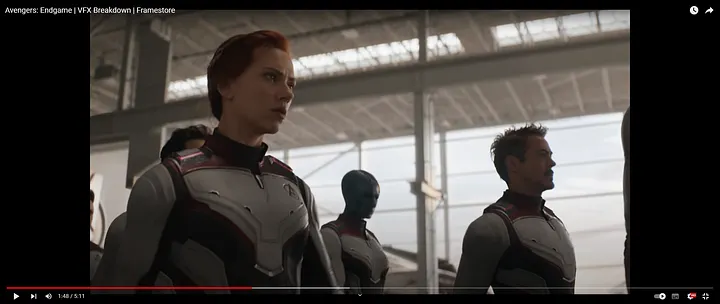
Costume and fashion archives have become increasingly important to satisfy our desire to remix the past and live in the 'forever now'. With digital-twin technologies these become contemporary assets that can be licensed to production studios.
How will studios fund a blockbuster, and how will streaming platforms make money in future? Through smart product placement. Next time someone wants that Marilyn Monroe dress in a film, they could physically recreate it — or, with VFX, simply paint it in. As the two industries increasingly share technology platforms, a symbiosis will develop between film studios and luxury brands.
It's been speculated that the next James Bond and Fantastic Four films will be set entirely in the 1960s. It is easy to imagine Sue Storm or Pussy Galore wearing a 1960s Balenciaga gown — a digital asset easily monetised further, turned into mass-market content and merchandise such as an NFT or fashion filter, without devaluing the original. Just connecting us more with our favourite brands and franchises.
Matthew Mounsey-Wood
DigitalFirst enables ResponsibleFirst.
Excerpt from 'Digitalising the Archive' — a lecture and Digital Practice workshop given at Kingston School of Art, 2023. Originally published on Medium, November 2023.